


National Geographic 1970 August
Publisher: National Geographic
Format: Paperback
ISBN: none
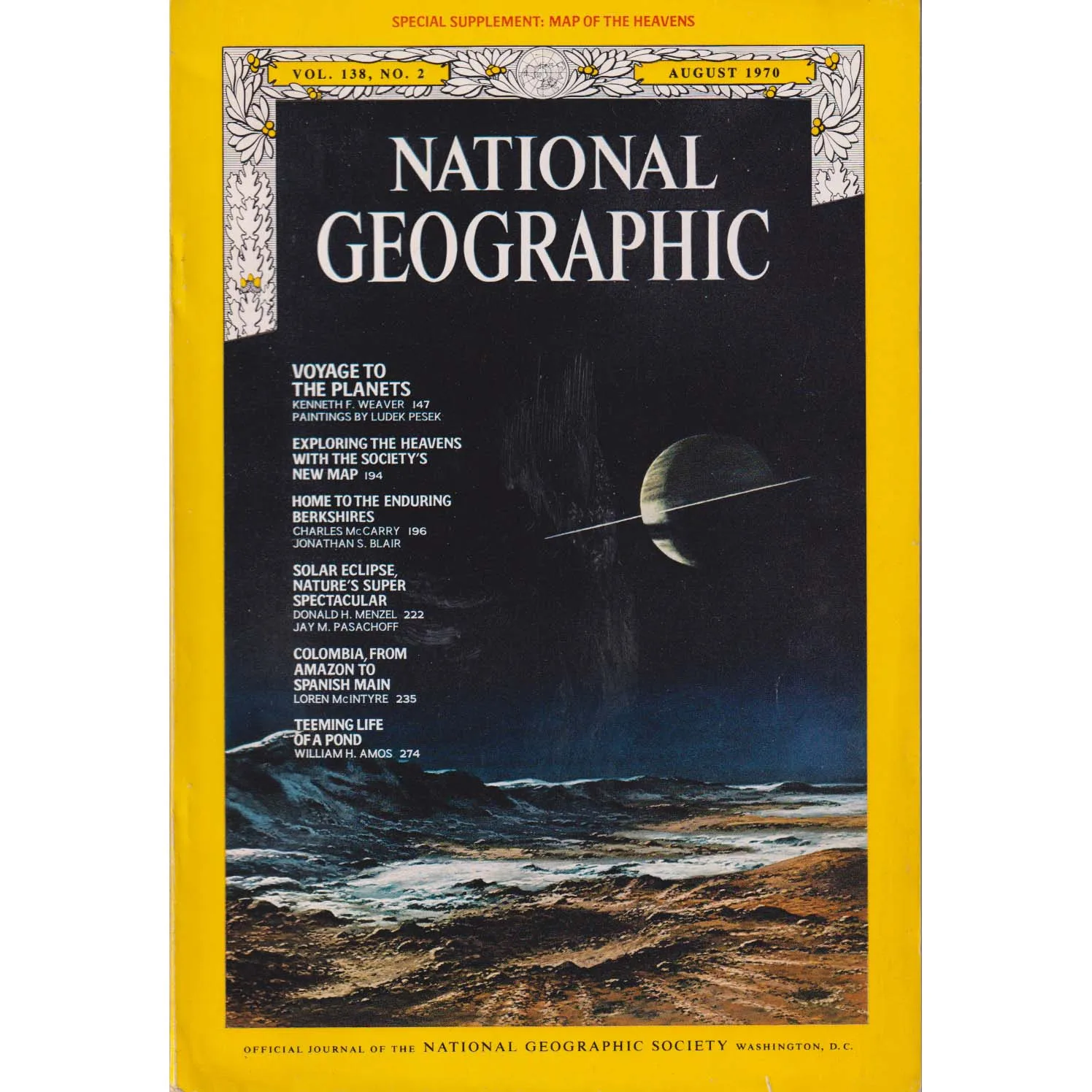
August 1970, and National Geographic is basically leaning over your shoulder and saying, in its calmest, most confident voice: “Right. Let’s do the universe.” The cover is an absolute mood — deep space, a lonely ringed planet hanging in the black, and a rugged foreground that makes you feel like you’ve accidentally opened your magazine on the surface of another world. Up top it proudly announces a Special Supplement: Map of the Heavens, because 1970 was the era when a magazine could casually include a star map and expect you to behave like a responsible, curious adult who might actually use it.
This is vintage Geographic at its most gloriously ambitious: not content with showing you Earth, it decides to hand you the night sky as well, neatly folded (in theory) inside a yellow-bordered time capsule. It’s the kind of issue that makes you want to step outside and stare upward for ten minutes, then immediately remember that it’s cloudy and you live under a streetlamp. Still: the intention is noble.
The main event is Voyage to the Planets — which sounds like a ticketed tour, except it’s delivered through paintings, writing, and pure 1970 optimism. This is pre-internet wonder, pre-high-res everything, when space was both real and mythic. You’ll get that classic blend of science, imagination, and “we are going to explain this properly,” with the kind of authoritative tone that makes you feel you could confidently discuss Saturn at a dinner party. (You cannot. But you’ll feel like you can.)
Then there’s Exploring the Heavens with the Society’s New Map, which is essentially the magazine giving you homework in the nicest way possible: “Here’s the sky. Learn it.” It’s charmingly earnest — a reminder that once upon a time, being a nerd meant having paper charts and patience, not an app that tells you what you’re looking at while you stand there blinking.
But because National Geographic cannot go all-in on any single theme without throwing in an entire extra life’s worth of reading, the rest of the issue is wonderfully eclectic. You’ve got Home to the Enduring Berkshires (the comforting, terrestrial palate cleanser: trees, towns, and that steady American landscape energy), Solar Eclipse, Nature’s Super Spectacular (because the sky must also be dramatic and slightly inconvenient), Colombia, From Amazon to Spanish Main (a whole sweep of geography and history in one tidy headline), and Teeming Life of a Pond — the classic Geographic trick of zooming from cosmic scale right down to the microscopic chaos happening in a small patch of water you probably walk past without a second thought.
It’s like the magazine is showing off: Planets? Sure. Stars? Absolutely. Eclipses? Of course. Massachusetts hills? Why not. Colombia? Let’s go. Pond scum? Bring it in. The range is ridiculous, and that’s exactly why these older issues are such fun — they treat curiosity like a full-time job.
Condition is Good, which means this copy has survived more than half a century with respectable dignity: still readable, still handsome, still carrying that faint old-paper vibe that makes everything feel more real. No ISBN, because magazines in 1970 didn’t need barcodes to feel important — they simply arrived, monthly, like a trusted instructor with excellent pictures and very high expectations of your attention span.
Sold by Crappy Old Books, which is fitting, because this issue is basically a collectible slice of peak analog wonder: a time when you could buy a magazine and come away with the heavens in your hands. Perfect for collectors, space romantics, astronomy dabblers, map lovers, and anyone who wants their coffee table to whisper: I own a star chart and I am not afraid to use it (once I figure out how to fold it back).
Keep browsing: See more National Geographic books Other books by National Geographic
